The modern age of Anime arrive in Japan in the 1960s, and over the course of the next decade or so boomed into the giant robot, space battle genre bender that we would soon recognize as the anime of today.
Evolving over the next 30 years or so, it reached a peak where it could begin to overtake and become an integral part of other cultures, much like the Hollywood of the 1930s quickly grew to encompass the rest of the world and inform their pop culture. In the same manner, American pop culture becomes increasingly informed by the trends and cult response to anime.
 Anime first appeared in the US market in the 60s with shows like Kimba the White Lion and Astroboy. However, the national consciousness as to where these shows came from as well as the poor marketing of the shows made them forgettable and rather than a jumping in point, they act as a nostalgic reminder.
When Speed Racer arrived, the beginnings of a true consciousness that Japan was creating something new and exciting began to set in. The popularity of Speed Racer was never that of its American contemporaries, but it created in a set fanbase the willingness to devour newer offerings later on in Starblazers and Robotech (a convoluted perversion of multiple animes, but still a relative success in the states). Still, the affect was mostly underground.
In the 1980s, the introduction of Beta and VHS made it possible to join together with friends and watch more varying forms of anime. Truly it was the technological revolutions of the coming years that would make it truly possible for anime to perforate the American entertainment bubble. When Akira arrived in 1989, the effect was palpable. Receiving only a limited American screen release, few saw it in initial release, but the copying of VHS tapes and word of mouth made it something of a cult sensation. Those that knew of Akira were fans for life, eagerly awaiting their chance to partake more and more of the growing trends out of Japan.
For Japan’s part, this era was a period of major expansion, a veritable boom in the business. The 1980s saw the success of shows like Gundam and Dragon Ball overgrow the national consciousness and become runaway sensations. The explosion of the manga industry before hand, with serializations of works by Akira Toriyama and Katsuhiro Otomo in the early 80s simmered in the youth of Japan and finally seeing the commercial possibilities of these works, creating in the process a major conglomerate of companies in the Akira Committee to bring the massive budget of Akira to fruition.
By the 90s anime was the mainstream in Japan, and the result was the ramping up of production and increased output of shows. In part because of the simple, streamlined art style, multiple artist were able to work on a single project and create on episode a week for years at a time, resulting in monumental runs such as the case of Dragonball (156 episodes) and Dragonball Z (276 episodes). The ability to serialize and turn a story into something that millions of youths would tune into each and every week made companies billions (of yen) and secured the kinds of commercial sponsorships and funding necessary to undertake incredible projects that would require vast sums of money to complete.
Back in America, a few executives were beginning to see the effect these shows were having in Japan. Slowly and very carefully they began taking the most popular, Dragonball Z and Sailormoon for example and finding timeslots very early in the day, before the daily retinue of American cartoons, testing the waters of marketability. In 1995, the trickle of anime into the states was just that, a relative trickle. Sailormoon aired every morning in syndication, but chopped up and missing key seasons to relate the endings of important storylines. Dragonball Z ran an equally mild run early on Saturdays in syndication that was abruptly cut when the rights to the show were lost by the initial company and purchased by Funimation.
All the while, works from Japanese masters like Hayao Miyazaki were being overlooked, passing unnoticed through limited release in the states, while making him a God of his craft in Japan. All the while companies like Manga, Funimation, and Viz were buying up licenses and releasing little known, untraceable shows that no one knew the origin of. The shows were treated poorly, often dubbed and cut up to match American audiences. Viz even launched the first Anime magazine in 1993 with Animerica, primarily reviewing their own products but still giving a view of the culture that no one knew anything about.
But, in 1995, the release of the shows in America along with the premiere and rave reviews of Neon Genesis Evangelion in Japan, Otaku interest abroad began to spike. Otaku is a bid of a misnomer as it’s a bit of an insult in Japan, a mean spirited way to call someone a nerd. Here though, it generally means a purveyor of Japanese pop-culture and with the Otaku so in style right now it’s less of an insult than a clique. The import and fan subbing of shows began in earnest via VHS editing software that few if anyone had access to. The early 90s was a time of massive growth of interest in the little known import of Anime though, and the American marketplace wasn’t slow to react.
 In 1997, television networks made broad sweeping moves to bring shows to the mainstream. The Sci-Fi channel had always had a small niche in its latenight line up for cult classics like Vampire Hunter D, but Warner Bros finally brought the genre to primetime. Funimation finally got their licensing figured out and Dragonball Z saw its triumphant return to the Cartoon Network, with new episodes to follow a year and a half later. And in 1998, a little known video game for the Gameboy exploded in the American market, bringing along with it its entire arsenal of marketing ploys, including the overwhelmingly childish, but enormously popular Pokemon anime. Finally, children across the nation were gluing themselves to the television set as earnestly as their Japanese counterparts had for nearly a decade before hand.
Miyazaki’s new film played to better reception, receiving a proper release via Miramax. Princess Mononoke was a success in the terms of the time, even receiving the coveted two thumbs up (let alone a review at all) from Siskel and Ebert. Films began to arrive in America more liberally, still finding limited release, but release at least. And the shows began to pour in. At the time, the fansub scene was more or less the only way to get access to some of the more obscure titles being released in Japan. But as the market boomed, so did the licensing by major companies, and it actually started to become illegal to fansub certain shows because they might be released by a company eventually.
Thus began the final and full assimilation of Japanese pop culture into American. The DVD format sped up the process, as more episodes of a show could be packed into a disc than a VHS and production costs plummeted, removing a lot of the financial risk of an untested foreign product in the American marketplace. Cartoon Network debuted its Toonami afternoon cartoon slot, in which they featured anime that had been around for a little while, but managed to appeal to a much larger demographic and spread the word about these great story driven cartoons from across the ocean. An entire generation grew into the growing popularity and became entranced by the epic storylines, amazing storytelling and ability to show in a cartoon what many considered adult themes and much more mature perspectives on things like competition and personal success. The Japanese ability to cross genre and the extremely high production values that started to go into shows made in the late 90s and beyond meant amazing shows that appealed not just to children but to adults and beyond.
What started as a crossover, slowly began to actually change the way in which American’s marketed their television to children. Shows with more adult content appeared, and in some cases emulated the Japanese format. The writers at Pixar crafted brilliant, more maturely themed cartoons without the silly musicals of Disney past, and Disney even dissolved their tried format in favor of more mature, complete stories. The devolution of American quality in cartoons though as they attempted to match the output meant even more Japanese entries in the market. Now, if you turn on Fox kids in the morning you’ll find over half of the shows on are animes. And Cartoon Network still presents multiple entries themselves, with more mature offerings in their Adult Swim block late at night. Spirited Away won the Oscar for best animation in 2003 and South Park, the quintessential American barometer of cultural trends at first knocked the trend with their Chinpokemon episode, later to embrace it (while still mocking it) via changing their own art style in the Weapons episode just a couple years ago.
Nowadays, you’ll find anime oriented t-shirts everywhere, an entire aisle devoted to DVD releases in Best Buy (compared to the one row only seven years ago) and the success of the Anime Network, a channel solely devoted to Anime programming. Magazines like Newtype, a Japanese trade magazine for the Anime industry is now translated and released in America every month with previews of new shows, and American directors like James Cameron are looking to direct live action versions of manga like Battle Angel Alita.
Now, we see new releases from Japan within six months, and the fansub community has to scramble to keep up with what’s legal and what’s not legal to offer via their online services. The internet itself has made it a huge community, where a show can be recorded on Japanese television, ripped and subbed, then uploaded within a couple hours for the world to view. There’s no lay over, and new shows are immediately available. And it’s evident in the universities too. Japanese is one of the most sought after languages, filling up immediately with a yard long waiting list every year, and more sections being added every year.
Japanese pop culture managed to tap a certain perspective that American counterparts were unable to do themselves and in so doing, cornered and grew in a market that few thought existed in America.
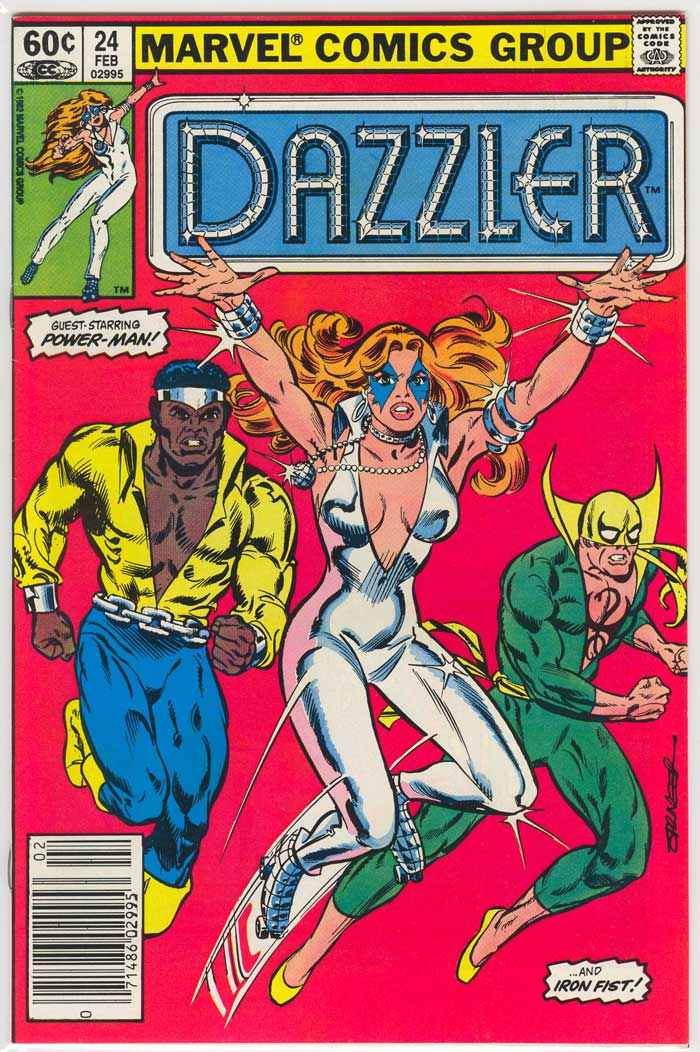 Dazzler (Alison Blaire) is a Marvel Comics superhero, associated with the X-Men. She first appeared in Uncanny X-Men #130 (February 1980).
 A dazzler is a type of a directed-energy weapon employing intense visible light, usually generated by a laser (laser dazzler). It is a non-lethal weapon intended to cause temporary blindness or disorientation. The first reported use of laser dazzlers in combat was by the British, during the Falklands War of 1982, when they were fitted to various Royal Navy warships in order to hinder low-level Argentinian air attacks.[1][2] Blinding weapons are banned by 1995 United Nations Protocol on Blinding Laser Weapons. Dazzlers are not intended to cause permanent blindness, therefore are thought to be able to skirt this regulation.
 Optionally they can operate in infrared when their targets are electronic sensors. Most of the contemporary systems are man-portable, and operate in either red (a semiconductor laser) or green (a DPSS laser) part of the spectrum.
 USS West Virginia with crew members trapped below in the dark


