


These are a part of the pictures I thought I have lost...

 Walt Disney was born December 5 1901, Chicago Illinois, USA.
Died December 15 1966, Los Angeles California, USA.
Walt Disney's Father was Elias Disney, his Mother was Flora Call Disney and his Wife was Lillian Disney.
Walt Disney was an American film producer, a director, a screen writer, a voice actor, an animator and a philanthropist.
The Walt Disney Company today, the company he co-founded, has annual revenues of an estimated US $30 billion, but how did that all happen? Well read on to find out a little more all about Walt Disney.
Born in Chicago, at age 5, Walt Disney moved to a farm near Marceline, Missouri. Here Disney loved to draw and play with his younger sister Ruth, in the pond, with the animals, in the trees.
In 1910 Walt Disney moved to Kansas City and began attending the Benton Grammar School. He graduated June 8 1911. In 1917 he began freshman year at McKinley High School, Chicago, Illinois and also enrolled in a night course at Chicago Art Institute.
At the age of 16 Walt Disney dropped out of school to join the Army but as he was too young he instead joined the Red Cross with a birth certificate forged by his mother (to make him 17 and not 16). He drove an ambulance in France covered in Disney characters.
In 1922 Walt started "Laugh-O-Grams", selling short animated films to local companies in Kansas. The company ended but Walt still had the work he had begun on The Alice Comedies.
In Los Angeles Walt Disney set up "Disney Brother's Studio". He hired Lillian Bounds to ink and paint celluloid and she later became his wife. They married July 15 1925.
Mickey Mouse was created in 1928, his birthday be November 18, the release date of Steamboat Willie. He was originally named "Mortimer" but later christened "Mickey Mouse" by Lillian Disney. Mickey changed to color in 1935 and soon gained supporting characters like Donald Duck, Goofy and Pluto. In 1932 Disney received a special Academy Award for Mickey Mouse's creation.
Walt Disney worked on Snow White and The Seven Dwarfs from 1934 until 1937. This was the first animated feature animation in English and also Technicolor. The premier was December 21 1937 with a standing ovation. Snow White and The Seven Dwarfs became the most successful motion picture of 1938 and earned over $8 which today would be $98. Walt Disney then completed Pinocchio, Fantasia and Bambi.
 Walt Disney started to draw plans for Disneyland, California, USA in the last 1940s. It opened July 17 1955 and is still open today. It is now called Disneyland Park and has been since 1998.
In 1964, Mary Poppins, Walt Disney's most successful film of the 60s was released.
Walt Disney World Resort, Florida began construction in 1967 and opened in 1971.
Walt Disney sadly died of lung cancer, after years of chain smoking, in 1966. His brother, Roy O. Disney carried on with the Florida project but died in 1971, just months after it opened.
Today, the Walt Disney Company owns, among other assets, two water parks, eleven theme parks, five vacation resorts, thirty nine hotels, eight motion picture studios, six record labels, eleven cable television networks, and one terrestrial television network.
 The Banshee (pronounced /ˈbænʃiː/, BAN-shee), from the Irish bean sí ("woman of the síde" or "woman of the fairy mounds") is a female spirit in Irish mythology, usually seen as an omen of death and a messenger from the Otherworld. Her Scottish counterpart is the bean shìth (also spelled bean-shìdh).
 Although not always seen, her mourning call is heard, usually at night when someone is about to die. In 1437, King James I of Scotland was approached by an Irish seer or banshee who foretold his murder at the instigation of the Earl of Atholl. This is an example of the banshee in human form. There are records of several human banshees or prophets attending the great houses of Ireland and the courts of local Irish kings. In some parts of Leinster, she is referred to as the bean chaointe (keening woman) whose wail can be so piercing that it shatters glass. In Kerry, the keen is experienced as a "low, pleasant singing"; in Tyrone as "the sound of two boards being struck together"; and on Rathlin Island as "a thin, screeching sound somewhere between the wail of a woman and the moan of an owl".
 Banshees are common in Irish and Scottish folk stories such as those recorded by Irish-American writer Herminie T. Kavanagh. They enjoy the same mythical status in Ireland as fairies and leprechauns. Banshees continue to appear in modern fiction that deals with mythology, folklore or the supernatural.
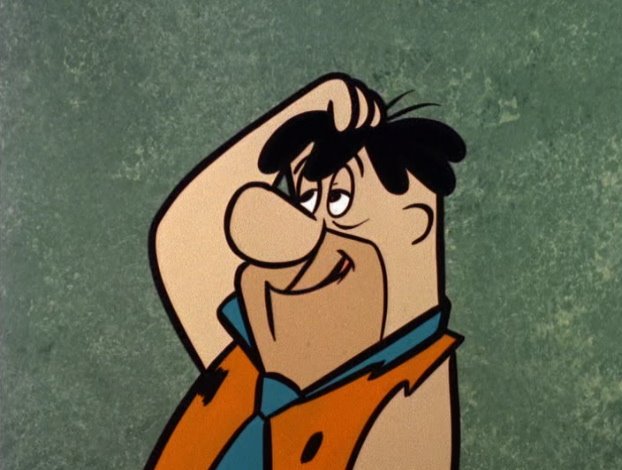 Stock animation is one of the more popular forms of animation. Anyone looking for help with a project that needs animation can use stock animation. Stock animation has grown in popularity due to the increasing reach of the Internet and television. Stock animation is used to entertain and present information in an interesting way, so as to sustain viewer interest. In fact, many a company owes its profile presentation to stock animation.
Animation projects are time consuming and require a lot of creative output. With this being the case, the use of stock animation helps reduce the time and aids in increasing creativity required for completing an animation project. Stock animation is often the start for a project, as far as an animator is considered. Stock animation also goes well with other creative elements. You can now make your own DVD using stock animation. One can use stock animation for backgrounds, making certain sequences more interesting to view.
 Stock animation comes in different formats like animated gifs, flash animation, and composite animation. The gif format, also known as the graphics interchange format, is used for some Web page animation. They can be found in literally thousands of Web sites on the Internet. These animations are considered annoying by some. The next most common form of Web animation is Flash, which is perhaps the most versatile and widely used form of animation as far as the usage. Stock animation for Flash, though expensive, is time saving and makes for excellent creative output. Composite animations are created by combining different animations together to create a single finished animation. They are used in television to a great extent.
 Although there are different formats of stock animation, one can choose the right one suitable for one's project. One can get extensive information on stock information and the different types of software used through online resources.


